
Post-Operative Instructions
If your pet was a recent patient of Simon Veterinary Surgical, refer to the following post-operative instructions, so you know exactly what to expect following the procedure.
Recovery

Your pet has just undergone major surgery, so close monitoring at home is important. Mild discharge, bruising, swelling, and lethargy can be normal during early healing. For up to 24 hours after anesthesia, your pet may be sleepy, mildly disoriented, restless, or have a decreased appetite. This is common and temporary. Keep your pet warm, comfortable, and reassure them. They should start feeling more like themselves soon.
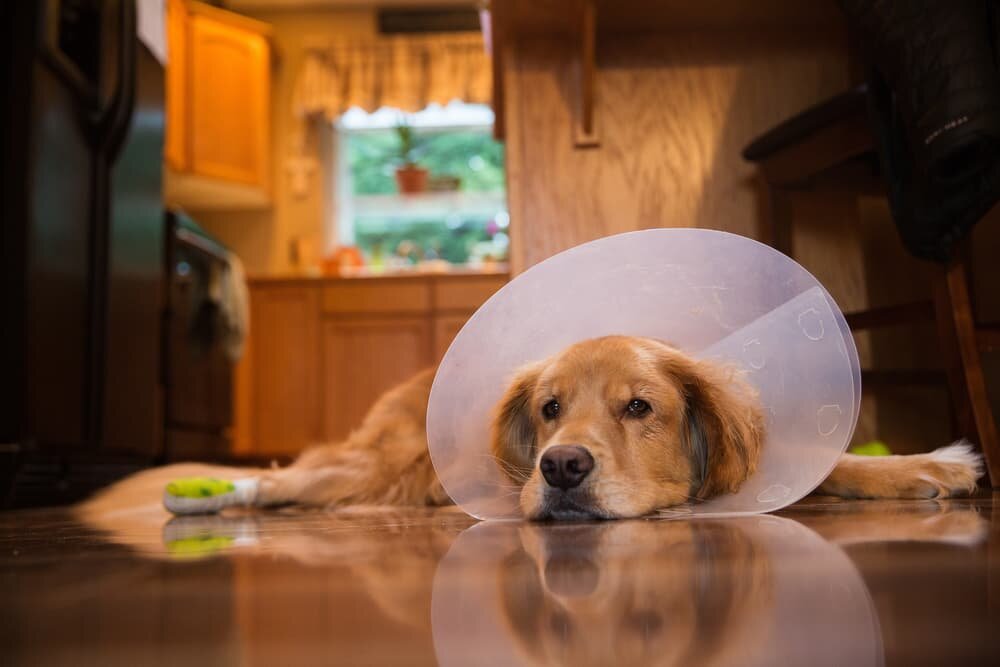
Your pet must wear an E-collar (cone) for at least 2 weeks to protect the surgical site. Licking or chewing at the incision can cause skin damage, infection, and serious complications that delay healing or require additional treatment. As the incision heals, the area may feel itchy, which increases the risk of self-trauma. For this reason, the E-collar must stay on at all times. We do not recommend soft E-collars or donut-style collars, as they are often ineffective at preventing licking and chewing.
Seek emergency veterinary care immediately if your pet has difficulty breathing or if their gums appear pale or blue.
Activity

For the first two weeks after surgery, it’s essential to limit your pet’s activity, whether the procedure was orthopedic or soft tissue. This helps the incision heal properly, reduces the risk of complications, and supports a smooth, comfortable recovery.
Follow up

For orthopedic surgery, your pet will have several recheck visits (unless otherwise noted). Details are outlined in the Canine Rehabilitation Schedule, and all rechecks and necessary medication refills are included in the surgical fee.
If you have any questions or concerns along the way, please don’t hesitate to contact us, we are always happy to help and want to make this recovery as smooth as possible for both you and your pet!
Medications

Orthopedic Surgeries: Your pet received a long-acting local pain injection that will help keep the surgical area comfortable for up to 72 hours, as well as a long-acting antibiotic injection that remains effective for approximately 14 days.
The supplements provided support healing and can reduce the need for stronger pain medications. Continue these until completed, unless directed otherwise.
Soft Tissue Surgeries: Please follow your discharge instructions for when to give medications at home.
For both surgeries: Common side effects of oral medications may include vomiting, diarrhea, or sedation. If these signs are mild, continue to monitor your pet. Contact us if they worsen or persist. Please do not change or increase any medication or supplement doses without consulting us.
Food + Water

Your pet may have a decreased appetite after surgery due to anesthesia. Offer half of their normal meal at the time discussed. If they are not interested, it is okay to skip today’s meal and resume normal feeding amounts and times the following day.
Fresh water may be offered as soon as you get home. Your pet may drink less than usual since they received IV fluids during surgery - this is normal.
Because of anesthesia, injectable medications, and fasting prior to surgery, your pet may not have a bowel movement for 3–5 days, and urination may take up to 48 hours.
If your pet has not defecated by day 3, you may add 1–2 tablespoons of canned pumpkin to meals until bowel movements resume. If no bowel movement occurs by day 5, please contact us.